
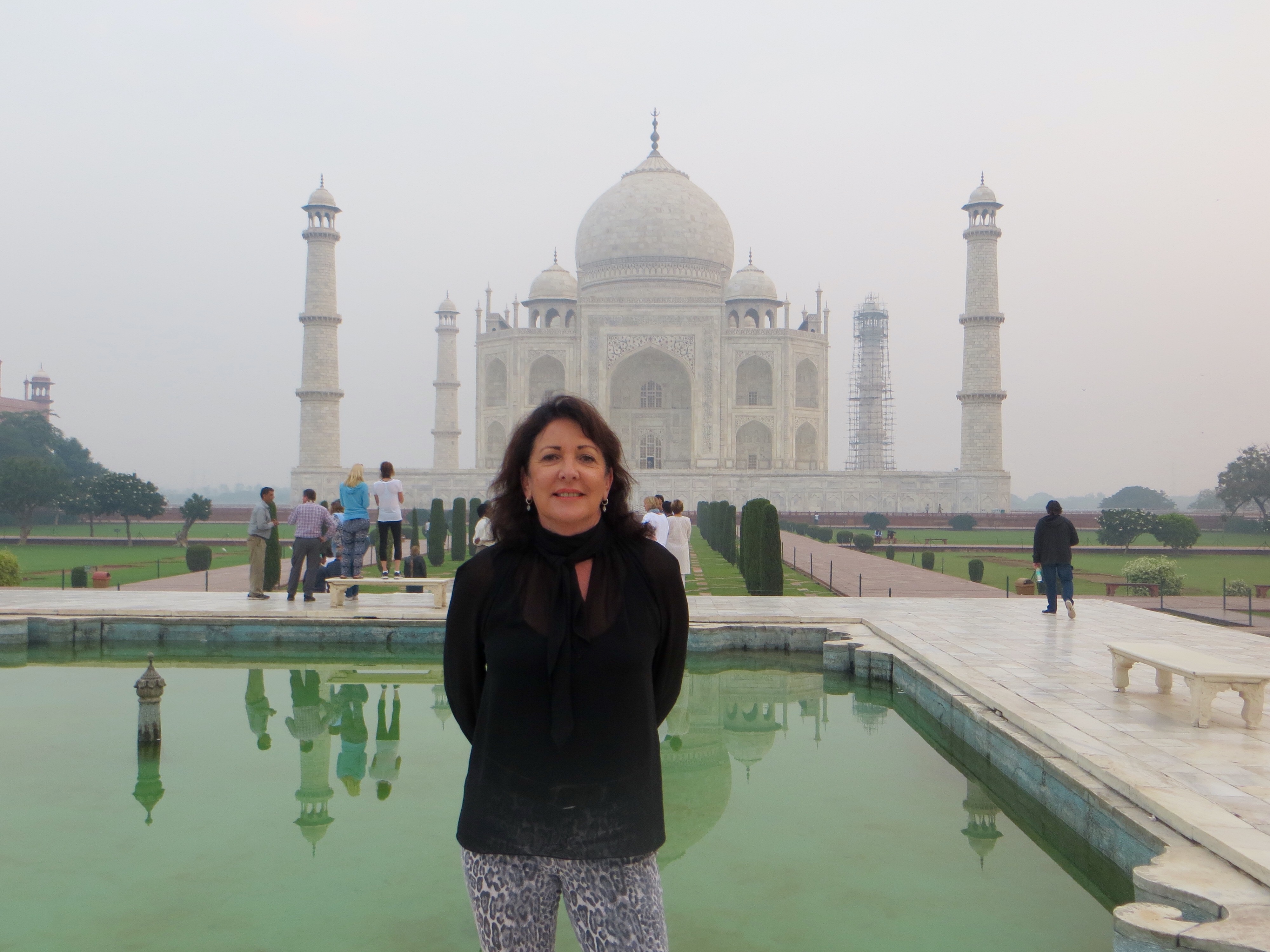
The Taj Mahal in Agra reigns supreme as the iconic image of India. Its delicate minarets, gracefully curved archways and ice cream scoop domes entices travellers to make the pilgrimage to stand at its entrance and wonder at its grandeur. The wonder isn’t only found in its construction as it is also rich in history and has its own unique bewitching appeal.
The Taj Mahal’s magical allure draws tourists to Agra like moths to a flame. The marble mausoleum is inlaid with calligraphy, precious and semi precious stones and intricate flower designs. Every year millions of tourists visit the Taj Mahal to marvel at what is widely considered the most beautiful building in the world.
As a child, I was fascinated by the Taj and the love story between Shah Jahan and his beloved wife Mumtaz Mahal to whom the building is dedicated. The magnificent structure did not disappoint as it was even more beautiful in real life and larger than I had imaged.
My sunrise visit was probably the best time to appreciate its great beauty. The crowds are fewer, the light is softer and it is at its most atmospheric in the early morning sunrise. I queued for an hour before the gates opened and it was well worth the wait.
From the Oberoi Amarvilas hotel I had a breathtaking view of the Taj Mahal from my balcony. It was a dream come true to be visiting this world wonder which brought tears to my eyes.
Agra flourished under the patronage of the Mughals who ruled India for more than 300 years. Artisans were attracted from many countries to build amazing monuments including the Taj Mahal. Here layers can be peeled away to reveal an amazing tapestry of life, of wars waged, of great architectural magnificence and above all the testimony of the undying love of a king for his queen.
Agra is located a half day drive from Delhi and is a contrast of red sandstone and white marble edifices. Like most cities in India the traffic’s atrocious and getting around is slow but the ever passing parade keeps you company.
With the Taj Mahal overshadowing Agra Fort, it is easy to forget that Agra has one of the finest Mughal forts in India. Construction of the massive red-sandstone fort, on the bank of the Yamuna River, was begun by Emperor Akbar in 1565.
Further additions were made, particularly by his grandson Shah Jahan, using his favourite building material – white marble. The fort was built primarily as a military structure, but Shah Jahan transformed it into a palace, and later it became his gilded prison for eight years after his son seized power in 1658.
Itimad-Ud-Daulah was the first tomb built in white marble. Nicknamed the Baby Taj, the exquisite tomb should not be missed. It doesn’t have the same awesome beauty as the Taj, but it’s arguably more delicate in appearance, particularly the finely carved marble lattice screens. This was the first Mughal structure built completely from marble, the first to make extensive use of coloured stone inlay and the first tomb to be built on the banks of the Yamuna River.

