
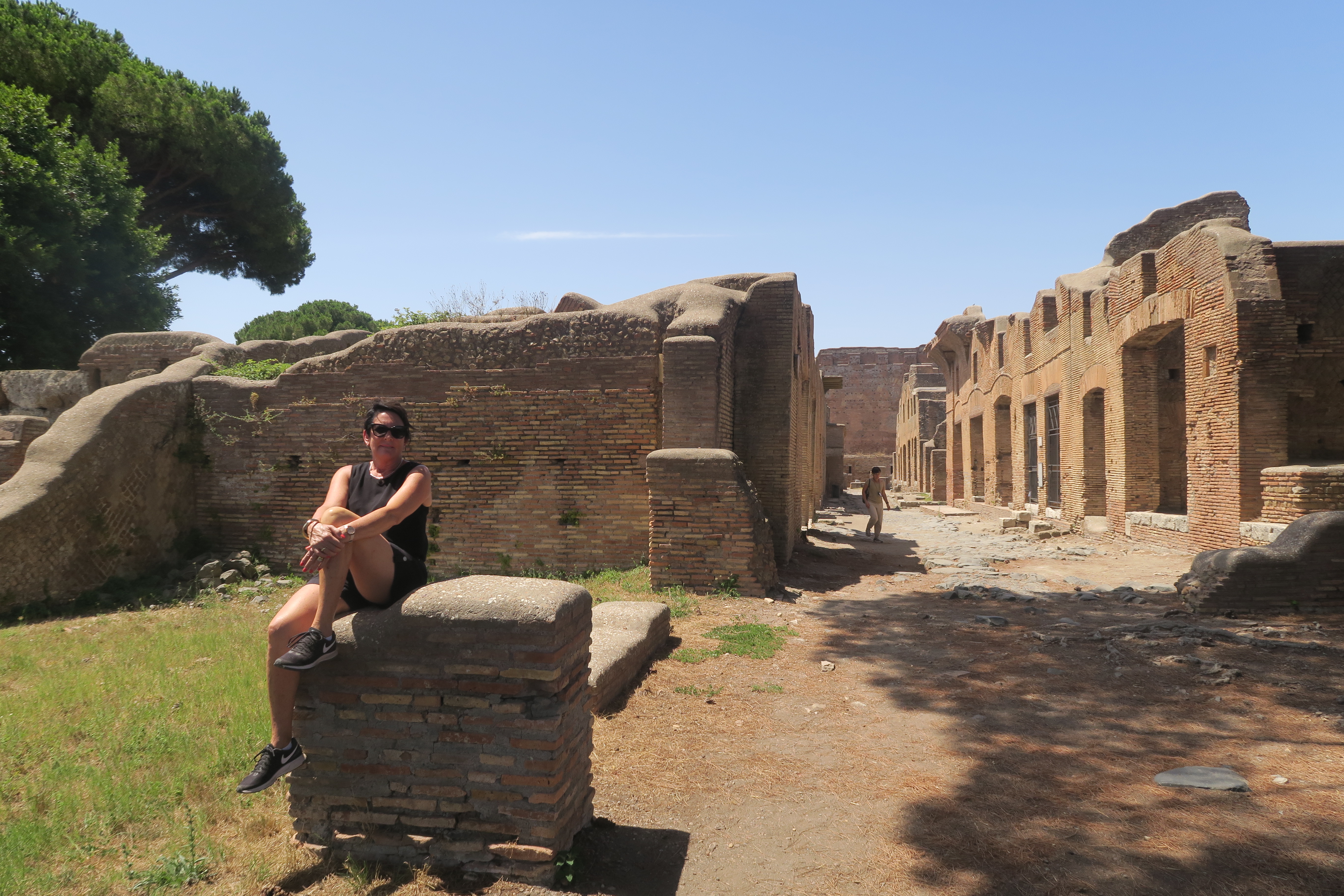
Ostia Antica is one of Italy’s finest and most underappreciated archaeological sites. It is located at the mouth of the River Tiber and the fabulous ancient port city of Rome is like a perfectly preserved city.
Founded in the 4th century BC, the city started as a fortified military camp guarding the mouth of the Tiber and it quickly grew to become a thriving port with a population of 60,000 by the 2nd century AD.
Decline set in after the fall of the Roman Empire and by the 9th century the city had largely been abandoned, its citizens driven off by barbarian raids and outbreaks of malaria. Over subsequent centuries it was plundered of marble and building materials and its ruins were gradually buried in river silt, hence their survival.
Sitting on the top of the ancient arena scanning the ruins of Ostia, I let my imagination take me back 2,000 years to the days when this was Ancient Rome’s seaport and a thriving commercial centre. Wandering around the ruins you can see the remains of the docks, warehouses, apartments, mansions, shopping arcades and baths which reveal a remarkably intact look at what it must have been like in those times. One of the highlights are the beautiful mosaic floors that were preserved by the covering of silt.
Ostia was settled around 620BC, its central attraction was the salt gleaned from nearby salt flats, which served as a precious meat preserver. Later, around 400BC, Rome conquered Ostia and made it a naval base, complete with a fort. By 150AD when Rome controlled all the Mediterranean, Ostia served as its busy commercial port.
Ostia Antica is just 30 minutes train journey from the Colosseum and offers ancient thrills to rival Pompeii. It’s well worth a visit and is an enjoyable day out of the hustle and bustle of Rome.

