
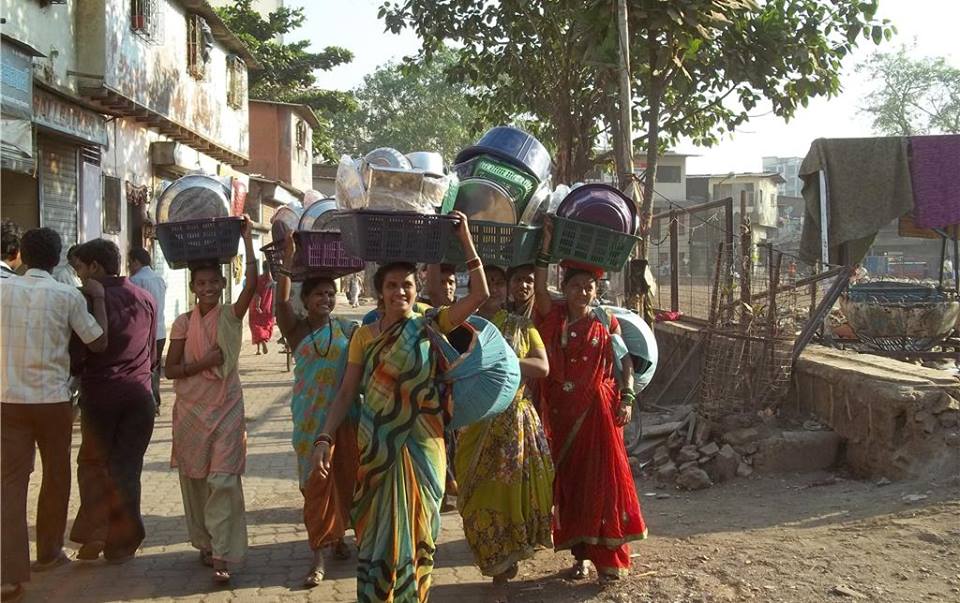
This chaotic melting pot of culture, commerce, music, food and rituals draws people from all over India. Mumbai is where people come to make their dreams come true – be it in finance, industry, the media, Bollywood or just simple manual labour.
Mumbai is home to many beliefs and religions; some even say cricket is likened to a deity here. On any given day, at any time there is game happening somewhere, come the weekend and the city is alive with cricket. Everyone seems to talk and breathe the game.
Formally known as Bombay, Mumbai is so unlike anywhere else I have travelled. With a population of 21 million it pulses at a non-stop frantic pace punctuated with a polluted, noisy, energetic rhythm only matched by its frenetic history.
Traditional and modern mix together with the wealthy and poor, ancient temples and modern high rises all exist effortlessly beside each other and industries old and new often sit side by side. The Dhoti Gnats, one of the more well-known open air laundry facilities sits amongst IT businesses and world banks.
The traffic is unbelievable; most drivers take no notice of the road rules but somehow it works. They just blast their horns and keep going, weaving their way around slower drivers just to get in front of another car.
Mumbai has Bollywood, India’s most prolific film industry, some of Asia’s biggest slums, the world’s most expensive home and the largest tropical forest in an urban zone. It is India’s financial powerhouse, fashion epicentre and a flash point of religious tension. It has even evolved its own language called Bambaiyya Hindi, which is a mix of everything.
The grandiose colonial-era architecture is a remarkable feature of the city centre. The Gate of India built on the waterfront in 1911 is a triumphal arch built to commemorate the visit of King George V and Queen Mary. The Victoria Terminus known as Chhatrapati Shivaji Terminus is the busiest railway station in India and the Prince of Wales Museum housing India’s finest collection of paintings and sculptures are all distinctive Raja-era constructions.
My favourite was the small humble Gandhi museum, a collection of photograph and books tracing Gandhi’s life which is housed in a small timber building in central Mumbai.
I spent a morning touring Asia’s largest slum; Dharavi which lies on prime property in the middle of the city, home to one million people living in 1.75 square kilometres. There are 15,000 one room factories dealing with 80 percent of the cities plastic recycling, as well as garment production, pottery and leather goods. It was just an amazing sight. My guide was an engineering student who lives in Dharavi with his parents, grandparents and brother.
In complete contrast I would return the Taj Palace Hotel and the lap of extreme luxury. Built in 1903 this beautiful hotel is just another world after a day of sightseeing in the jungle called Mumbai.

