
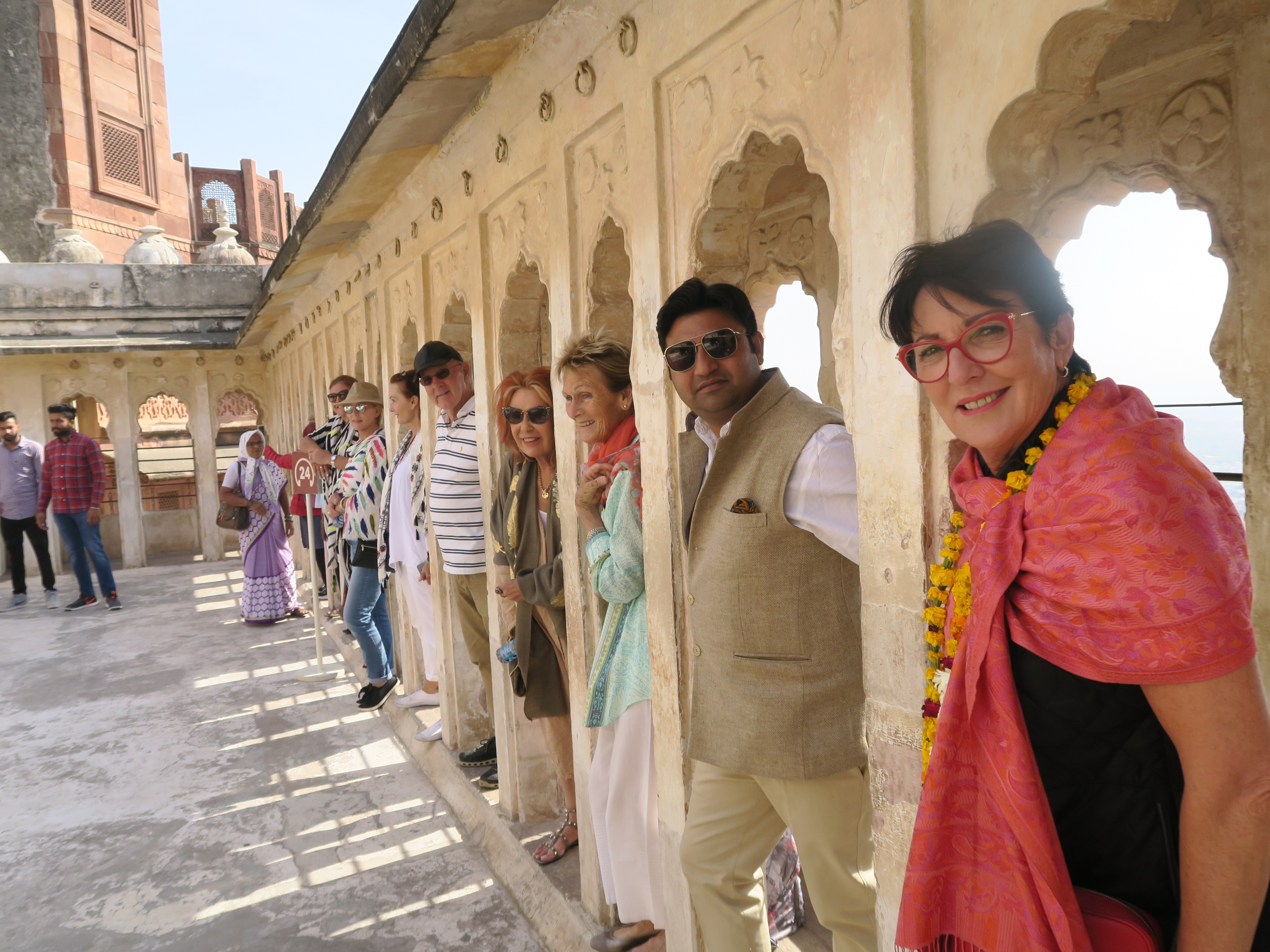
Returning to Jodhpur felt like I was visiting an old friend. The beautiful blue city of Jodhpur really is blue. Founded by Rao Jodha in 1459, the city stands at the edge of the Thar Desert and was a citadel of the ancient Marwar kingdom. It was a flourishing trade centre for opium, silk and copper, epitomizing the romance and splendour of feudal Rajasthan.
The majestic Mehrangarh fort dominates the landscape and is one of Rajasthan’s most majestic. It was described by Rudyard Kipling as ‘the creations of angels, fairies and giants’. Its forbidding ramparts are in sharp contrast to the flamboyantly decorated palaces within. The fort was added to by the later rulers between 17th and 19th centuries.
Inside the fort a fantastic museum houses an exquisite collection of palanquins, howdahs, royal cradles, miniatures paintings, costumes and furniture that displays the era’s regal history and all its splendour. The pleasure palace and sunken gardens is also a reminder of the unique Indian culture of the past.
The narrow alleys of the old city are an interesting challenge to explore. Wander through the bazaars where you will find everything from traditional handicrafts to copper pots and pans. The streets are crammed with shops that sell everything including shimmering temple decorations, heaped spices, jewellery, new and recycled colourful saris and the sweetest sweets I’ve ever tasted. A visit to the vegetable markets will reward you with colours and variety of produce from gourds to beans, leafy greens to tubers plus a showcase of tropical produce at its best.
The magnificent Umaid Bhawan Palace is perched on Chittar Hill, the highest point in Jodhpur and has views of the historical Blue City, vast sand dunes and Mehrangarh Fort. The palace was the last royal palace built before Indian’s independence. The maharaja at the time built the palace to create employment for the locals who were struck by famine in the 1920’s. A unique feature of the palace is that the manually chiselled sandstone blocks are put together in a special system of interlocking, requiring no mortar.
Be sure to spend a few days in the fabulous blue city!

